Moving in Philadelphia involves more than just packing boxes. Finding legal parking for your moving truck can be a real issue—especially on narrow, crowded streets with limited availability. Without the right parking permit, you risk fines, towing, or long walks hauling heavy furniture.
This Philadelphia parking permits guide will help you understand what types of permits are available, how to apply through the Philadelphia Parking Authority (PPA), and tips for keeping your move smooth and legal. Whether you’re moving into a row home or out of an office downtown, this guide will help you keep your moving day organized.
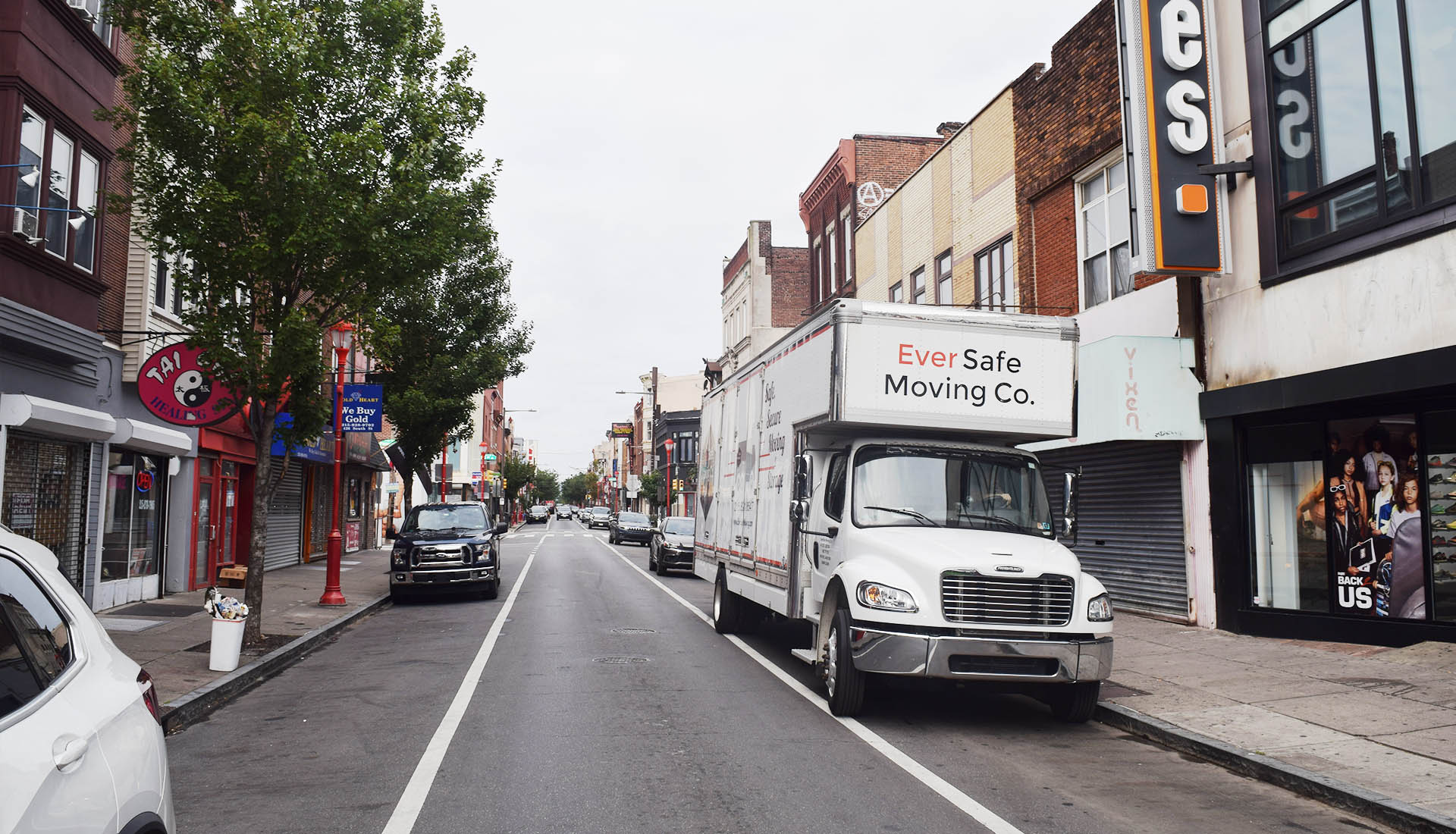
Why Moving Truck Parking Permits Are Required in Philadelphia
The city’s parking rules don’t leave much room for large vehicles. In many neighborhoods, parking is already tight. Residential parking, time limits, and permit parking rules can all affect where and when a moving truck can legally park.
The Philadelphia Parking Authority enforces these parking regulations closely. A moving truck without the proper parking permit could be ticketed, booted, or even towed. This leads to delays and extra expenses no one wants on moving day.
Parking permits help prevent blocked driveways, traffic congestion, and unsafe loading conditions. They let you take up legal parking spaces for a set amount of time without violating posted parking signs or neighboring permit zones.
When You Need a Truck Parking Permit in Philadelphia
A parking permit is needed for several common situations. You’re likely to need one if your move involves:
- A residential parking zone that enforces time limits or requires proof of residence
- A time-restricted zone where vehicles are not allowed to stay beyond a set limit (often 2 hours)
- A commercial or downtown area with limited loading access
- Any area where your truck might temporarily block driveways, sidewalks, or alleys
- Ongoing construction or special events that create additional restrictions
Even if you’re planning a short move, once a large vehicle occupies city street parking, you’re expected to comply with permit parking rules.
Related Article: When is the Best Time to Move?
Types of Parking Permits for Moving Trucks
Three common types of parking permits are used in Philadelphia for moving trucks, depending on location and purpose.
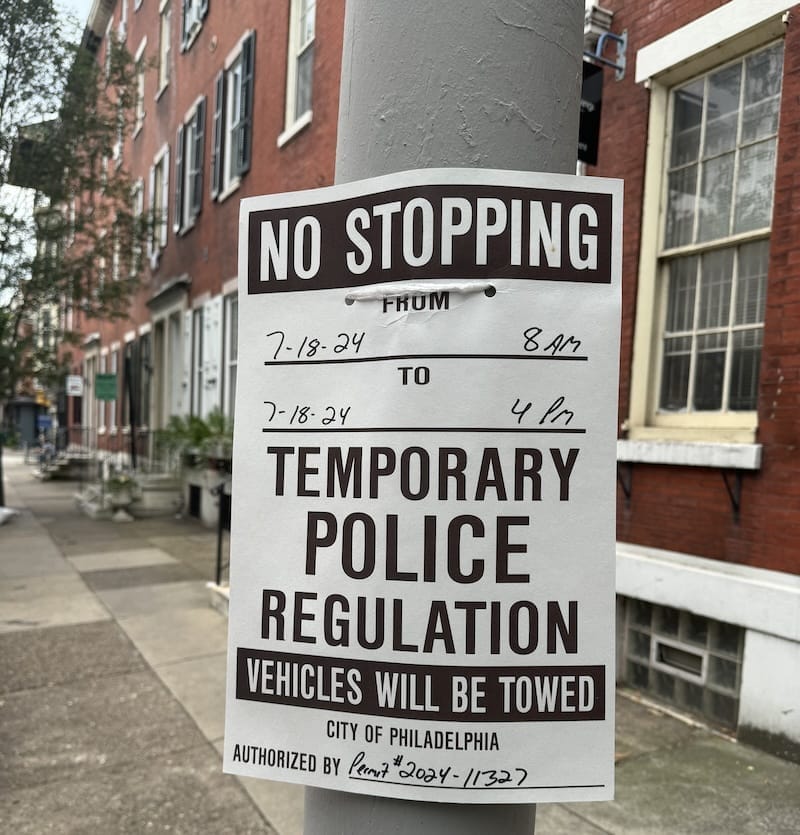
Temporary No Parking Signs
Temporary No Parking signs are often the most straightforward option. Once approved, these signs let you block off legal parking spaces in front of your property on the day of your move.
PPA requires you to post the signs at least 48 hours in advance. This gives neighbors enough notice and allows time for illegally parked vehicles to be moved. These signs are especially helpful in residential areas where available parking is scarce, and neighbors often compete for the same spots.
Even with signs up, vehicles still parked in those spaces can only be towed if the signs were posted correctly and in time. Always follow the guidelines to avoid disputes.
Residential Moving Permits
Residential areas across Philadelphia have special parking zones that limit who can park on the street and for how long. A residential moving permit allows you to legally park a moving truck longer than you’d be allowed under ordinary two-hour time limits.
If your move involves a permit-only street or a neighborhood with posted residential parking restrictions, this type of permit ensures your truck won’t get ticketed mid-move.
Unlike temporary signage, a formal residential permit sets aside a spot just for your truck and is tracked by the city. It’s ideal for longer moves that take several hours or more.
Commercial Moving Permits
Commercial permits work in a similar way, but they’re geared toward businesses.
If you’re moving equipment into a retail space, unloading inventory, or transferring office furniture into a commercial building in Center City, you’ll likely need a commercial moving permit.
These permits cover parking in commercial loading zones, areas near freight entrances, and busy spots where staying over the time limit could result in fines.
Businesses that move frequently benefit from securing commercial permits ahead of time, especially when using larger trucks that need more space.
How to Apply for a Philadelphia Parking Permit
Applying for a parking permit in Philadelphia is a step-by-step process. While it’s fairly quick, delays can happen—especially during the summer moving season. It’s best to apply well in advance to secure your spot.
You can begin your application online here: https://www.phila.gov/services/cars-parking-transportation/apply-for-a-parking-permit/.
Here’s how the application process works:
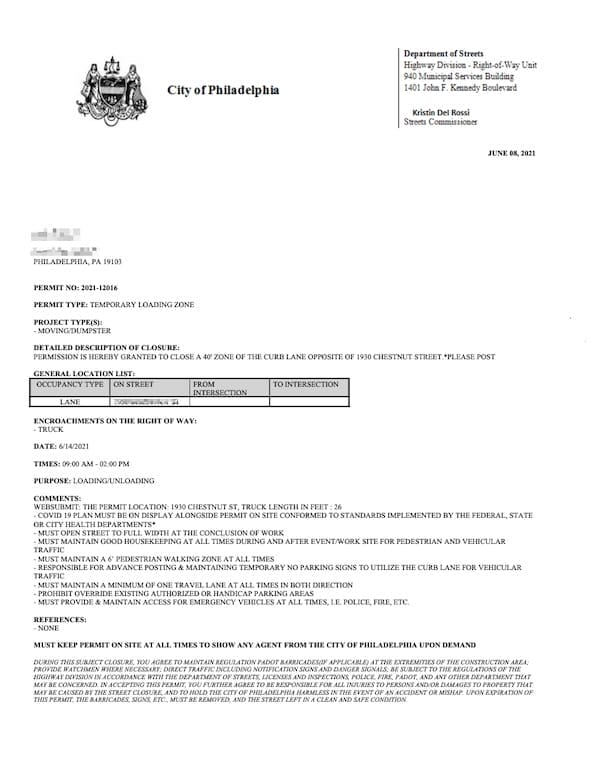
Step 1: Identify the Correct Permit Type
Decide whether you need temporary no-parking signs, a residential moving permit, or a commercial moving permit. The right permit depends on your location, the time of day, and whether time limits or permit parking rules apply to the area where your truck will park.
Step 2: Gather Required Information
Before you apply, make sure you have:
- Truck details: license plate number, make, and model
- Exact address and location where the truck will be parked
- Date and time your move begins and ends
- Expected duration and reason for the permit
Step 3: Submit the Application Online
Fill out the application form with all required details. If documents are requested, upload them before submitting.
Double-check your form before hitting submit to reduce the chance of delays.
Step 4: Pay the Permit Fee
Current 2025 rates are:
- $50 per day for 40 feet of space in Center City and University City
- $25 per day in all other Philadelphia neighborhoods
Each 40-foot section typically equals two standard street parking spaces. Payment is made online using a credit or debit card.
Once approved, you’ll receive your temporary parking signs and instructions for posting. Make sure to display signs at least 48 hours before your move date and clearly mark the reserved parking spaces on the street.
Related Article: How Much Does it Cost to Move in Philadelphia?
Tips to Secure Legitimate Parking
Planning your parking in advance keeps your move on schedule and within the law.
Apply Early
The PPA recommends applying for a permit 14 to 30 days before your move. Processing times can vary, especially from June through August when moving season peaks and school-year leases turn over.
Waiting too long could mean paying out-of-pocket for last-minute parking issues—or being forced to park your truck blocks away.
Use Legal Spaces Only
Only legal parking zones can be blocked off using your permit. Don’t assume the permit gives you authority to park in fire lanes, in front of hydrants, or across intersections.
Other important points:
- Avoid rush-hour zones or streets with restricted hours
- Place cones and post signs the full 48 hours ahead of time
- Choose a spot as close to your front door as possible
Plan for Narrow Streets or Heavy Traffic
For moves on smaller streets, park the truck in a spot that causes the least obstruction. If the street is narrow, load from a corner or cross-street where possible. Avoid peak traffic hours when loading delays are more likely to create backups.
What If You Can’t Get a Permit?
Sometimes, you may be too late to apply or find yourself in an especially tight area where no permits are issued.
Here’s what to consider:
- Call local parking garages to ask about oversized vehicle access
- Reserve loading dock space in advance if your building offers it
- Use a side street with fewer restrictions, even if it means a slightly longer carry
Some moving companies in Philadelphia include the parking permit process in their service contracts. Others partner with third-party permit services like MovingPermits.com that handle everything from the application to sign posting.
Hiring a company familiar with local Philadelphia parking authority procedures can make sure your setup won’t be interrupted.
Risks of Parking Without a Permit
Don’t skip the permit hoping to save time.
Here’s what can happen:
- $76+ tickets per day for unpermitted parking
- Parking violations added to your vehicle’s registration
- Towing or booting for blocking fire hydrants, alleys, or intersections
- Delays in your move if your truck has to be relocated
Beyond the cost of citations, not having close, legal parking makes your move slower. More distance means more hours—and most movers charge by the hour.
Why Hiring a Moving Company in Philadelphia Is a Smart Choice
Philadelphia’s narrow streets, competitive street parking, and layered parking regulations can turn even a well-planned move into a challenge. Hiring a professional Philadelphia moving company reduces that complexity.
Experienced local movers understand how the city works. They know how to navigate tight corners, deal with loading restrictions, and—just as importantly—secure the right parking permits on your behalf. That’s one less step for you to manage.
EverSafe Moving Co. has handled thousands of moves throughout Philadelphia. We’re familiar with the unique parking rules in neighborhoods like Center City, South Philly, and University City. We routinely manage the process of applying for Temporary No Parking Permits and posting signs properly and on time.
Here’s why working with a company like EverSafe Moving Co. makes sense:
- We reduce the risk of fines by parking legally and within permitted zones
- We help you avoid delays by securing permits well in advance
- We use proper equipment for loading and unloading in tight or high-traffic areas
- We plan the move to minimize disruption to neighbors and surrounding traffic
Schedule predictability and reduced stress are two things every move can benefit from. With EverSafe, the logistics are handled—so you can focus on settling in.
Key Takeaways
- A parking permit is required for most moving truck parking situations in Philadelphia, especially in residential zones, commercial districts, and time-restricted areas.
- The Philadelphia Parking Authority (PPA) offers three main types of permits: Temporary No Parking Signs, Residential Moving Permits, and Commercial Moving Permits.
- Permits must be applied for online and posted at least 48 hours before the move to avoid violations.
- Permit fees range from $25 to $50 per day based on location and the amount of space needed.
- Applying early—preferably two to four weeks in advance—is recommended during peak moving seasons.
- Not securing a permit can result in fines, vehicle towing, or other unexpected moving-day complications.
Parking Permits Are Worth the Effort
Moving in Philadelphia doesn’t have to be stressful, but you do need a plan for parking. The city’s permit process is straightforward if you apply early and know what type of coverage you need. With the right permit, you’ll avoid fines, speed up your move, and avoid unnecessary headaches on an already busy day.
From residential parking zones to Center City traffic rules, doing it right the first time will keep your moving truck where it’s supposed to be—without holding up the rest of the street.
Looking for help organizing your move or understanding the permit process? Don’t wait until it’s too late. Start planning now.
Frequently Asked Questions
How do I get a parking permit in Philadelphia?
You can apply for a parking permit online through the Philadelphia Parking Authority’s official website at [philapark.org](https://www.philapark.org). Alternatively, you can request an application by mail or visit the permit office in person at 35 N 8th Street, Philadelphia, PA 19106. For questions or assistance, call 215-683-9730 during business hours.
How much does a parking permit cost?
As of 2025, parking permit fees are $50 per day for 40 feet of space in Center City and University City, and $25 per day in all other areas of Philadelphia. One permit typically covers two standard street parking spaces (40 feet total).
How far in advance should I apply for a moving truck permit?
It’s recommended to apply for your permit 2 to 4 weeks before your move, especially during peak seasons like summer or the beginning of a school semester. This allows enough time for processing and ensures availability.
Can I post my own “No Parking” signs?
No. Only official Temporary No Parking signs issued or approved by the Philadelphia Parking Authority can be used to reserve space legally. These signs must be posted at least 48 hours before your move to be enforceable.