



Buyers' Guide for Household Moves: Everything You Need to Know

No Other Mover in Philadelphia
Matches Our Price Lock Guarantee

Eversafe moving trucks parked in front of a mansion house

Moving to a new home ranks among life’s most significant transitions, bringing equal parts excitement and stress. Whether you’re relocating across town or across the country, having a solid plan makes all the difference between a smooth experience and a chaotic nightmare. 

This comprehensive buyer’s guide for household moves walks you through every step of the moving process, from choosing the right moving company to settling into your new location. Consider this your roadmap to a successful, stress-free move.

Understanding Your Moving Options

Before diving into logistics, you need to decide how you’ll actually get your belongings from point A to point B. The right choice depends on your budget, timeline, and how much hands-on work you’re willing to do.

A full-service moving company handles everything from packing to loading to delivery at your new house, offering maximum convenience at a higher price point. Labor-only options provide professional movers to load and unload while you handle the driving yourself, which works well for local relocations. DIY moves using rental trucks cost the least but require significant time, energy, and help from family members or friends.

Container and pod services offer a middle ground, delivering a storage container to your driveway for you to pack and load at your own pace. The company then transports it to your new address, combining flexibility with professional transportation. Evaluate your specific situation honestly to determine which approach serves your needs best.

Creating Your Moving Timeline

A well-planned timeline transforms a chaotic moving process into a manageable series of tasks. Start early and keep all family members in the loop so everyone knows their responsibilities as moving day approaches.

8 Weeks Before Moving Day

This is the time to research and book your moving company, as professional movers get booked quickly during peak seasons. Begin decluttering each room and decide what you’ll sell, donate, or discard before packing anything.

4 Weeks Before Moving Day

Gather packing supplies and start boxing up rarely used items while notifying important parties of your new address. Schedule utility disconnections at your current home and connections at your new location, and request time off work for the big day. Obtain copies of medical and school records for all family members who will need them at your new home.

1 Week Before Moving Day

Confirm all details with your moving company and finish packing non-essential rooms. Set aside important documents, medications, and valuables that you’ll transport personally to your new home.

Day-Of Essentials

Do a final walkthrough, meet the professional movers with clear instructions, and keep your phone charged for communication throughout the day.

An empty EverSafe truck with its ramp down is ready to be loaded, while another truck waits nearby

Budgeting for Your Household Move

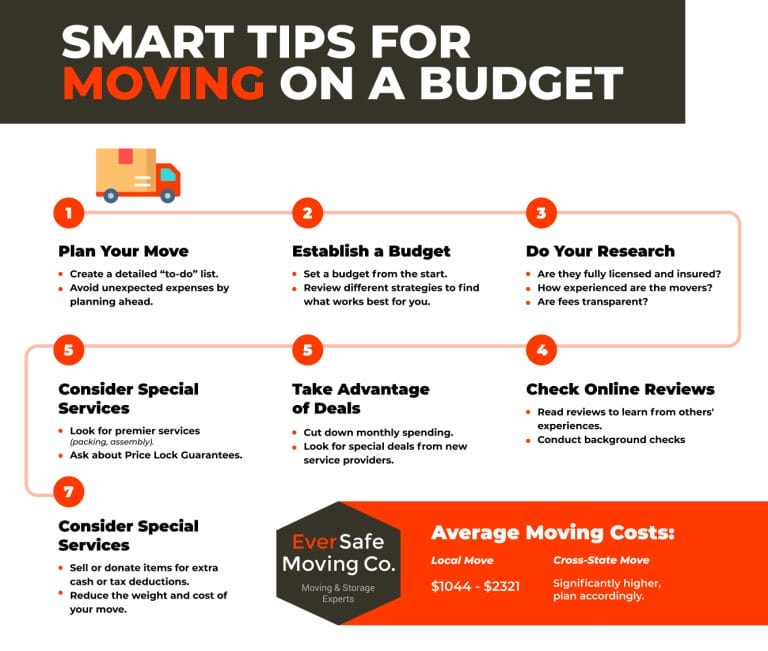
To avoid financial surprises, you need to understand the true cost of moving. Local moves typically run from $300 to $1,500, while long-distance moves can range from $2,000 to over $7,500 based on distance and volume.

Factors influencing the price include the weight of belongings, travel distance, time of year, and extra services like packing or storage. Moving in summer or at month-end is pricier due to high demand; aim for a mid-week, mid-month move for potential savings.

Be wary of hidden fees, such as charges for stairs, long carries, bulky items, or last-minute changes. Request detailed, written estimates from multiple companies, specifically asking about potential additional costs. Reputable movers offer transparent upfront pricing.

EverSafe Moving Co. team loading furniture into a moving truck for a Philadelphia to New York City move

How to Choose the Right Moving Company

Selecting trustworthy professional movers protects both your belongings and your peace of mind throughout the moving process. Take time to research thoroughly rather than simply choosing the cheapest option available.

Verify that the company holds proper licensing and insurance for your type of move

Check reviews on multiple platforms, including Google, Yelp, and the Better Business Bureau

Request references from recent customers and actually contact them

Get at least three in-home or video estimates for accurate pricing

Ask about their claims process for damaged or lost items

Confirm they use their own employees rather than subcontractors

Avoid movers who demand large cash deposits, won’t give written estimates, or offer vague license details. Never sign blank documents or work with a company that refuses an in-home assessment. If your instincts tell you something is wrong, find another mover.

Related Article: What to Know Before Hiring Movers

An empty EverSafe truck with its ramp down is ready to be loaded, while another truck waits nearby

Packing Strategies and Supplies

Smart packing protects your belongings and makes unpacking at your new house significantly easier. Invest time in proper techniques now to save yourself stress and potential damage later.

Essential Packing Supplies

Stock up on quality packing supplies before you begin, including sturdy boxes in various sizes, packing tape, bubble wrap, and markers. Your moving company may offer supply packages at competitive rates.

Room-by-Room Packing Approach

Tackle one room completely before moving to the next, which keeps the moving process organized and prevents items from getting mixed together. Pack the rooms you use least first, saving everyday spaces for last.

Protecting Fragile and Valuable Items

Wrap breakables individually in packing paper or bubble wrap, and use dish pack boxes with cell dividers for glasses and stemware. Place heavier items at the bottom of boxes with lighter items on top, filling empty spaces with packing paper to prevent shifting. Mark fragile boxes clearly on multiple sides so professional movers handle them with extra care.

Labeling Systems That Actually Work

Label each box with its contents and destination room at your new home using a color-coded system. This helps professional movers place boxes correctly and speeds up your unpacking process.

What NOT to Pack

Leave hazardous materials like propane tanks, paint, and cleaning chemicals behind—most moving companies won’t transport them. Perishable food, plants, and irreplaceable important documents should travel with you personally to your new location.

Related Article: 10 Packing Tips For Moving, From Someone Who’s Conducted 100+ Moves

Managing Important Documents and Records

Keep vital documents (ID, birth certificates, passports, financial/insurance/medical records, moving contract, lease/closing documents) with you, not on the moving truck, to prevent loss or damage.

Update your address with banks, credit card companies, employers, insurance, and subscriptions at least two weeks before moving. Also, file a change of address with the post office, update voter registration, and transfer utilities, internet, and security services for your new home.

Moving Day Preparation and Execution

The big day has arrived, and preparation determines whether it runs smoothly or descends into chaos. Wake up early, eat a good breakfast, and dress comfortably for a long, active day.

Conduct a final walkthrough of your current home before the professional movers arrive, checking all closets, cabinets, and storage areas for forgotten items. Ensure pathways are clear and parking is available for the moving truck. When your moving company arrives, introduce yourself to the crew lead and walk through any special instructions or fragile items that need extra attention.

Keep essential items accessible throughout the day, including your important documents, phone chargers, snacks, water, basic tools, and a first-night bag with toiletries and a change of clothes. 

At your new home, direct movers to place boxes and furniture in their designated rooms based on your labeling system. This saves you from shuffling heavy items later and speeds up the settling-in process.

Settling Into Your New Location

Unpacking your entire new house in one day isn’t realistic, so prioritize strategically to make your space functional quickly. Focus first on bedrooms, bathrooms, and the kitchen—the areas your family members need most for daily routines.

Test smoke detectors and carbon monoxide alarms before arranging furniture

Locate the main water shutoff and electrical panel for emergencies

Verify that all locks work properly and change them if the previous owners had access

Introduce yourself to neighbors during your first week at your new home

Locate essential services like grocery stores, pharmacies, hospitals, and schools

Maintain familiar routines to help family members adjust to the transition

Explore the new location together and identify fun spots that children can enjoy

Helping family members adjust involves framing the move as an adventure rather than a disruption. Children especially benefit from exploring their new neighborhood and discovering exciting places they can look forward to visiting regularly.

Make Your Move a Success

This buyer’s guide for household moves has equipped you with the knowledge and strategies needed for a smooth relocation. From creating your timeline and choosing the right moving company to packing efficiently and settling into your new home, each step builds toward a successful transition.

Start planning early, stay organized with lists and labels, and don’t hesitate to ask for help from professional movers when the job exceeds what you can handle alone. 

Your new house awaits, and with the right preparation, moving day becomes the exciting milestone it should be. 

Ready to get started? Contact EverSafe Moving Co. today for a free quote!

Get Your FREE
Moving Estimate Here

"*" indicates required fields

Step 1 of 3 - Locations